

Product Safety Certifications for EU & US Markets
Product Safety Certifications for EU & US Markets
Selling fitness equipment in the European Union and United States requires compliance with specific product safety regulations. Failure to meet these standards can result in customs rejection, product recalls, and fines. This guide explains the key certifications and how Better Sports ensures compliance for every shipment.
European Union Requirements
CE Marking
CE marking indicates that a product meets EU safety, health, and environmental protection requirements. For fitness equipment, CE is typically required under the General Product Safety Directive (GPSD). Our CE documentation includes a technical file, risk assessment, and test reports from accredited EU laboratories.
REACH Regulation (EC 1907/2006)
REACH restricts the use of Substances of Very High Concern (SVHC) in products sold in the EU. For fitness equipment, this primarily affects latex, TPE, PVC, and dyes. We maintain REACH compliance certificates for all raw materials and provide SCIP database notifications where required.
RoHS Directive
RoHS restricts hazardous substances (lead, mercury, cadmium, etc.) in electrical and electronic equipment. While most fitness equipment is non-electrical, products with embedded sensors or smart features must comply. We verify RoHS compliance for all electronic components through supplier declarations and third-party testing.
EN 71 (Toy Safety)
Resistance bands, yoga mats, and foam rollers marketed to children may fall under EN 71 toy safety standards. We test for mechanical safety, flammability, and chemical migration (EN 71-1, -2, -3) when products are designed for users under 14 years old.
United States Requirements
CPSIA (Consumer Product Safety Improvement Act)
CPSIA applies to consumer products sold in the US. Key requirements include:
- Lead content limits (100 ppm for substrates, 90 ppm for surface coatings).
- Phthalate restrictions (DBP, BBP, DEHP, DINP, DIBP, DPENP, DHEXP, DCHP).
- Children’s Product Certificates (CPC) for items intended for users 12 and under.
We provide CPSIA-compliant test reports from CPSC-accepted laboratories.
California Proposition 65
Prop 65 requires warnings for products containing chemicals known to cause cancer or reproductive harm. We assess all materials for Prop 65-listed substances and provide warning labels when necessary.
FDA Registration (Where Applicable)
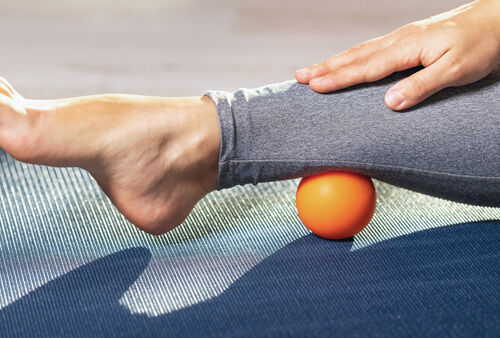
Foam rollers and massage balls marketed with therapeutic or medical claims may require FDA registration as medical devices. We guide clients on whether their product positioning triggers FDA requirements and assist with 510(k) documentation when applicable.
ASTM Standards
ASTM F963 (toy safety) and ASTM D412 (rubber tension testing) are commonly referenced for fitness products sold in the US. Our QA lab performs ASTM-compliant tensile, elongation, and aging tests on all rubber and latex components.
How We Manage Compliance
- Raw material screening: Every new material lot is tested for restricted substances before entering production.
- Supplier audits: We verify that our latex, TPE, and fabric mills maintain valid test reports.
- Pre-shipment testing: Random samples from each production lot are sent to third-party labs for confirmatory testing.
- Document control: Certificates, test reports, and declarations of conformity are organized by PO and retained for 5 years.
Need a specific certificate or test report for your compliance team?